
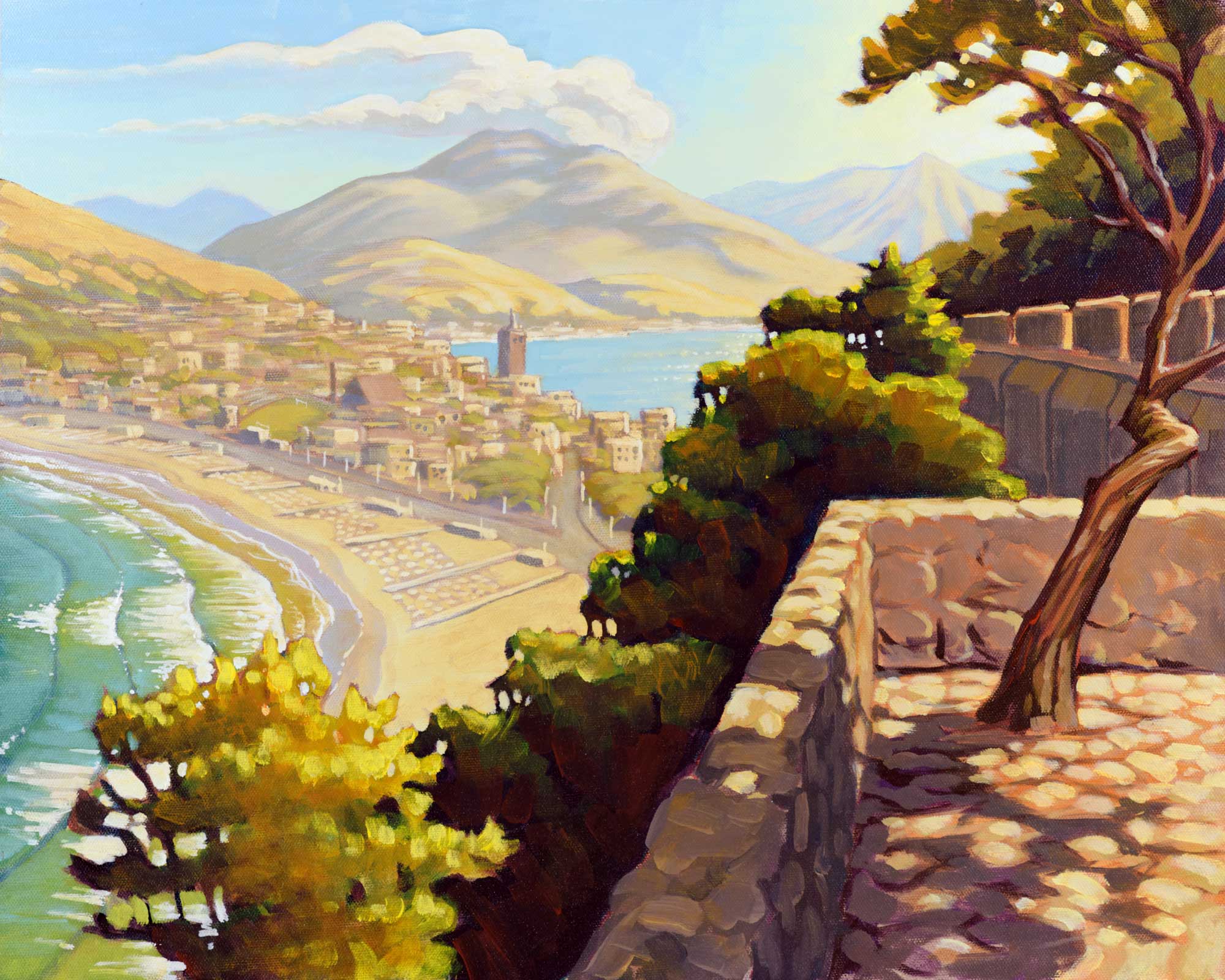
Solitaire

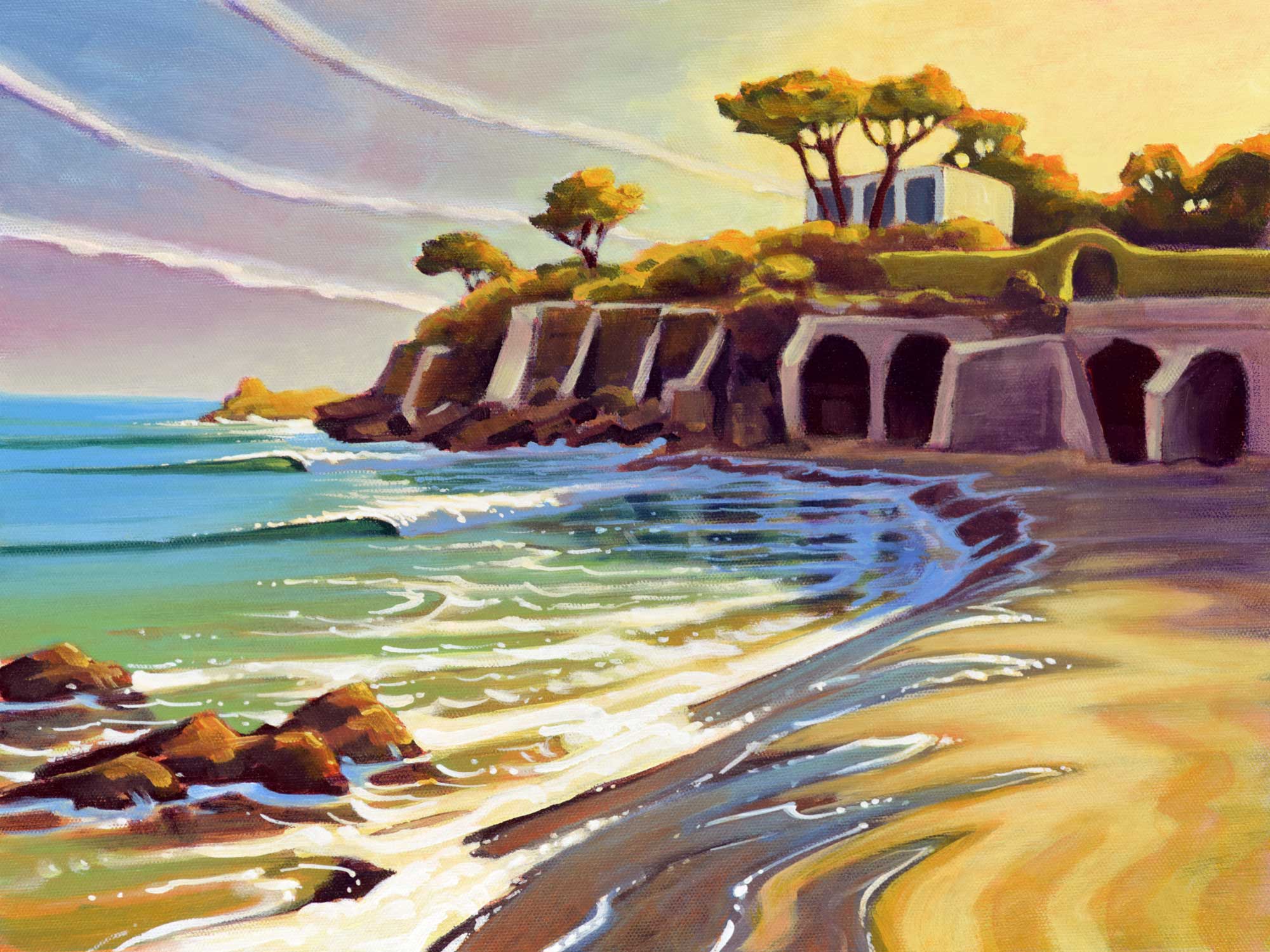
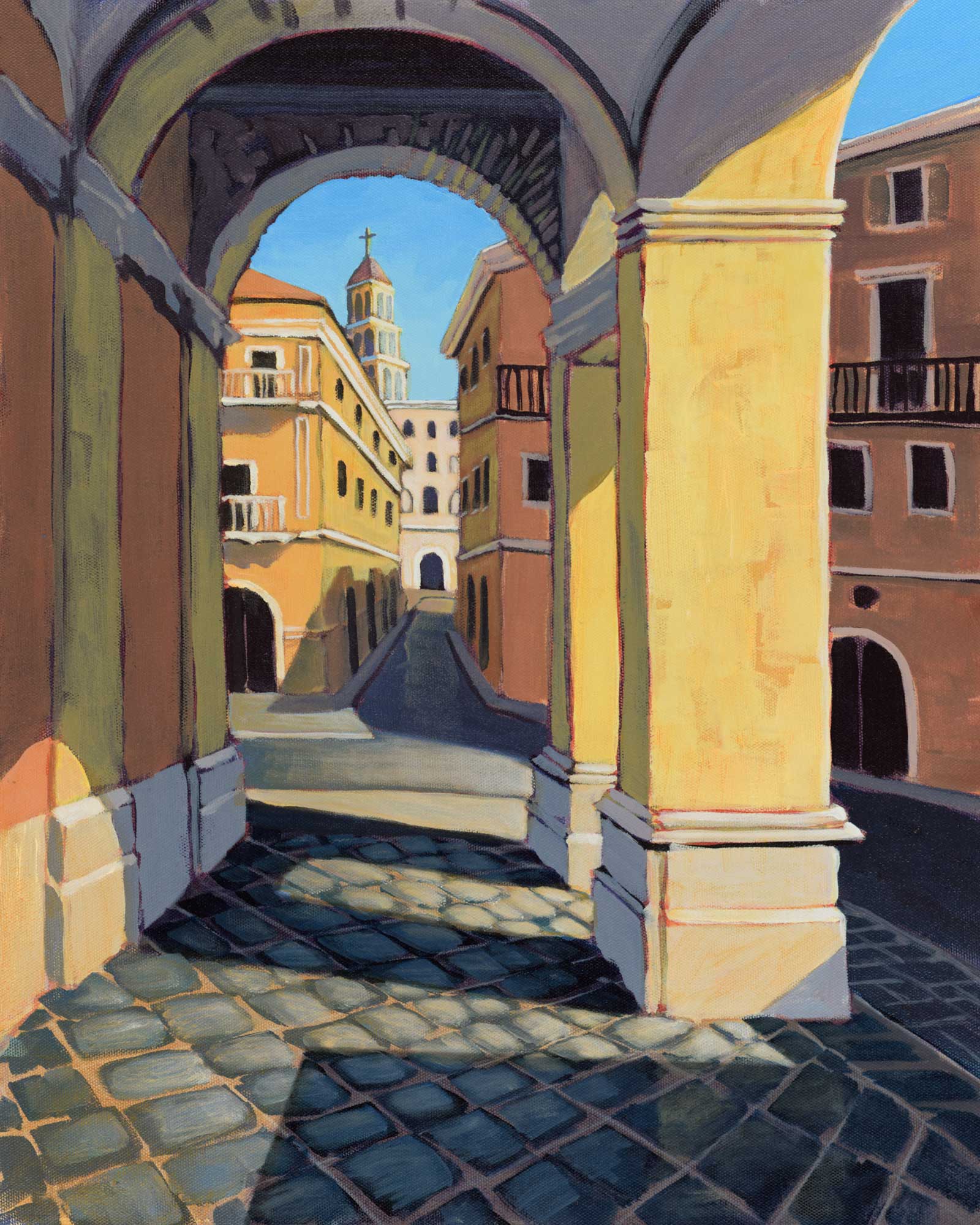
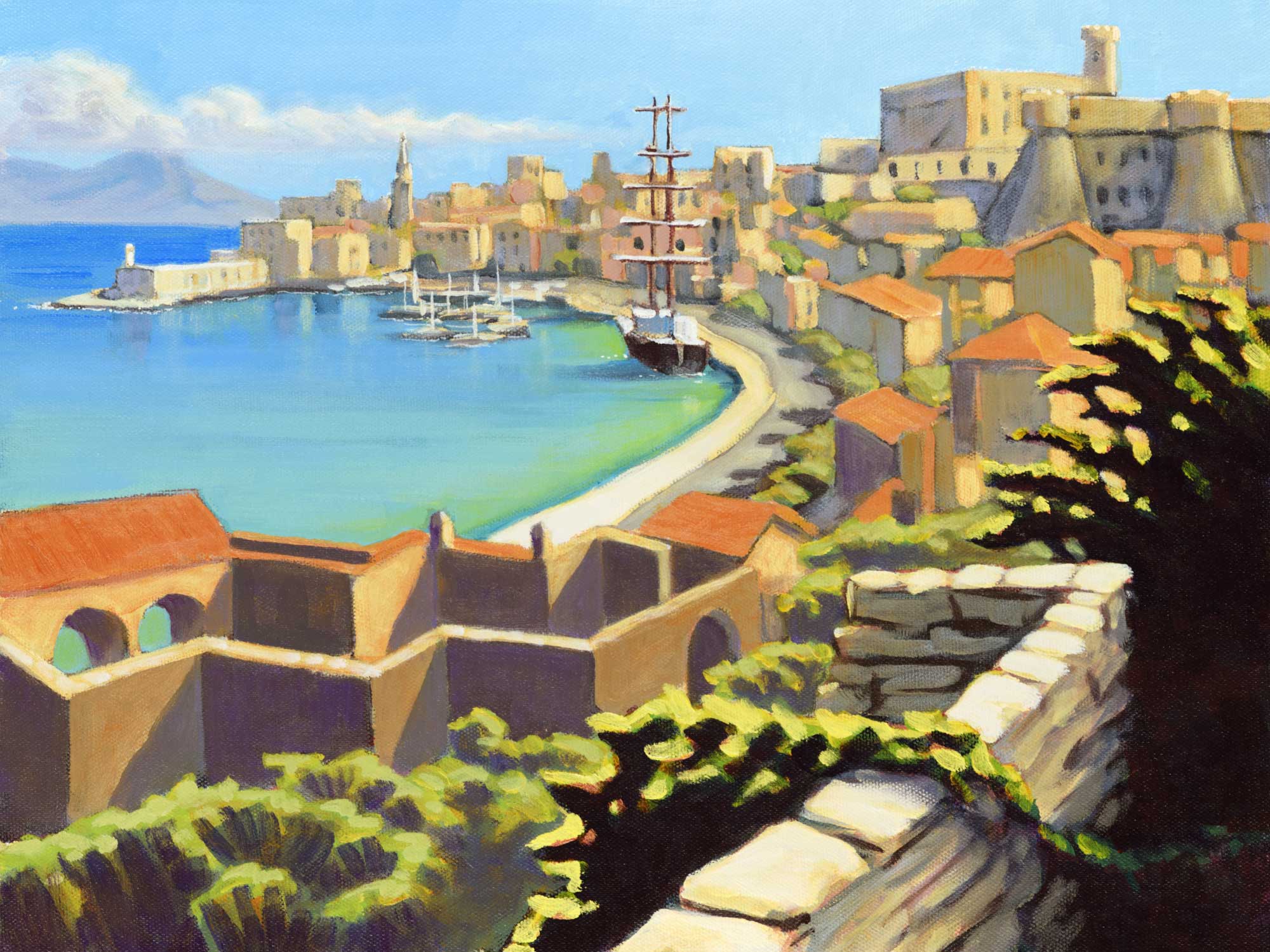
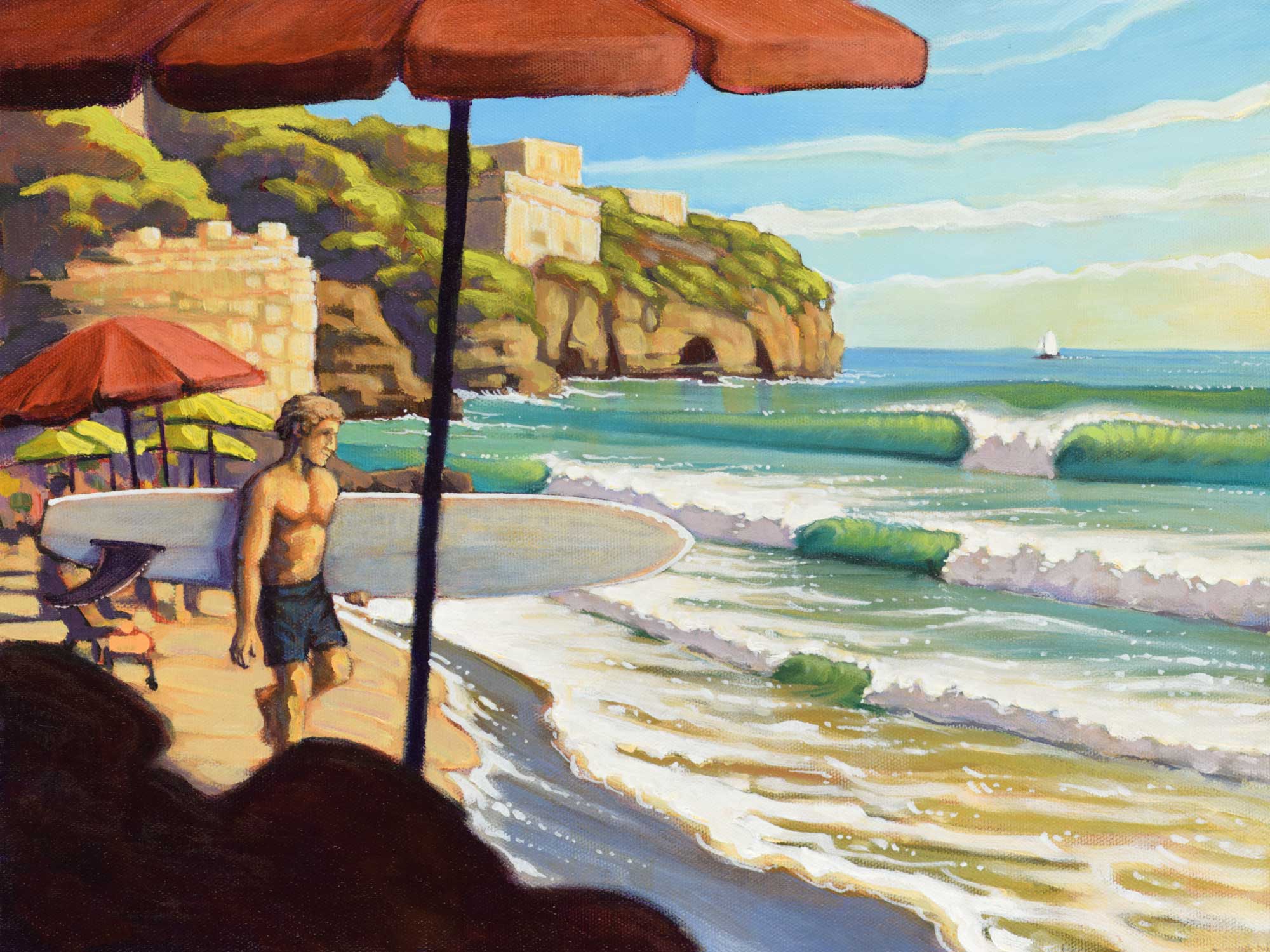
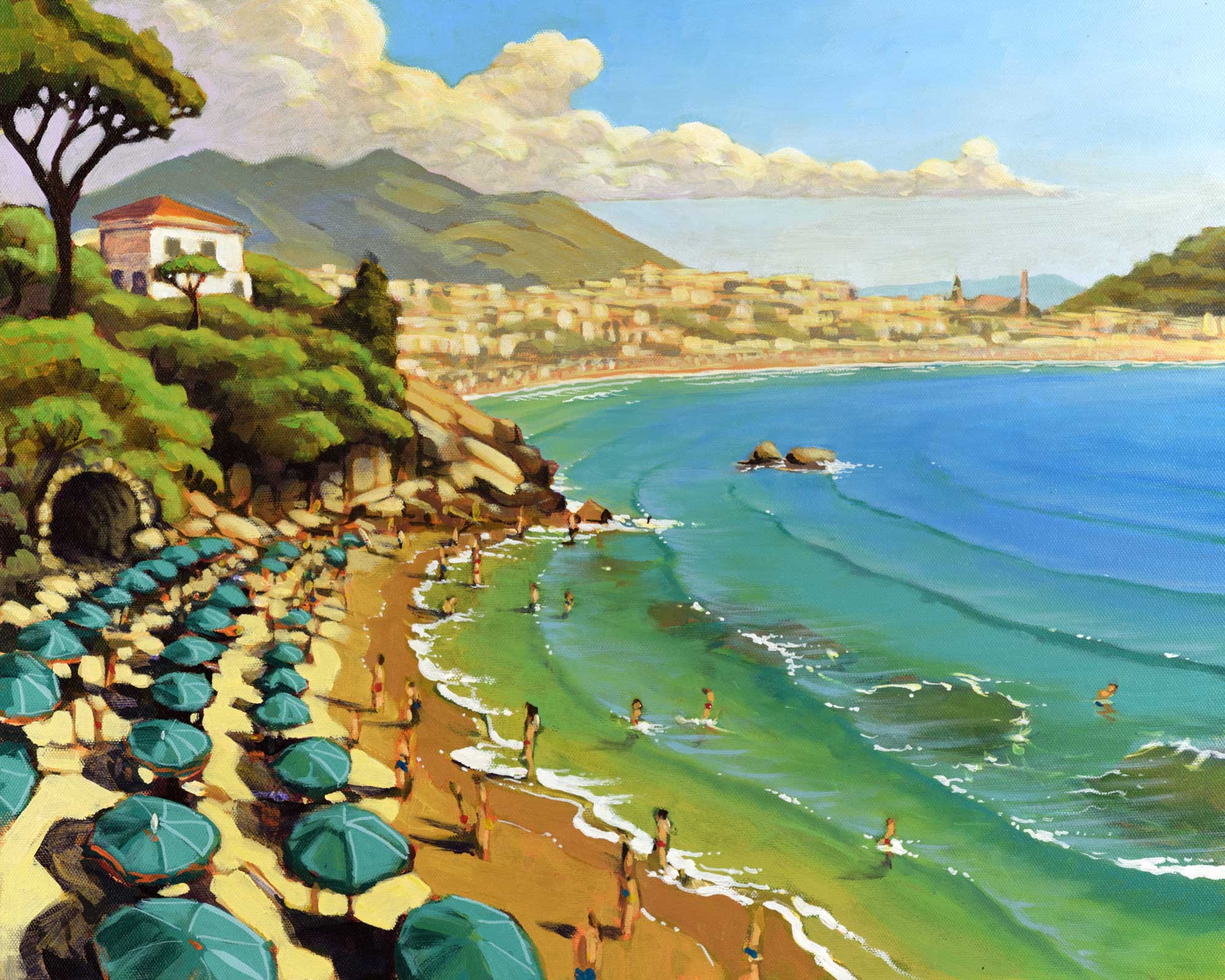
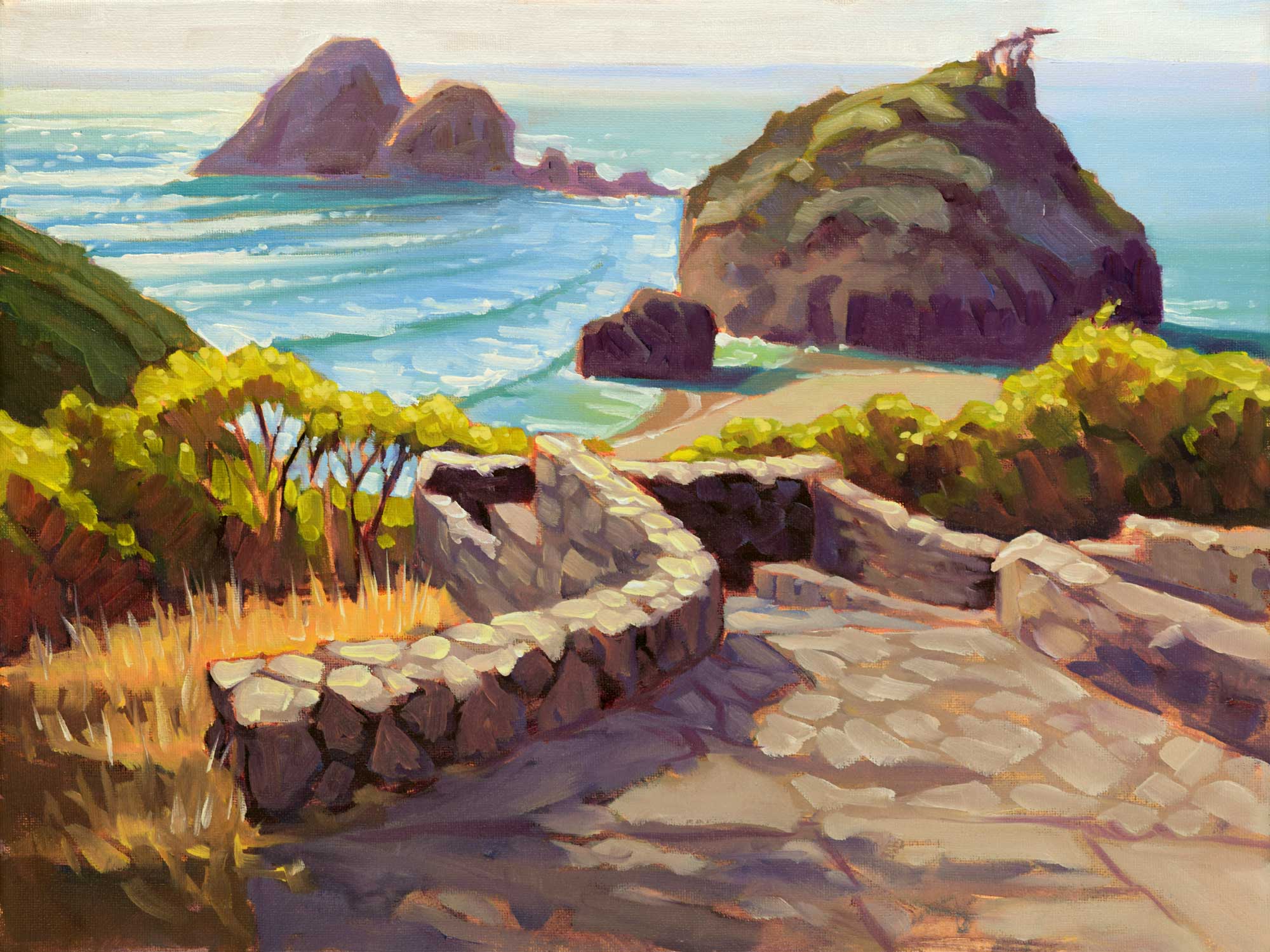
It can be anything you want.
Stone stairs lead down to an empty room that couldn’t contain the view so they left the walls and roof off altogether.It can be a community kitchen where breakfast burritos are served to surfers exiting the water on a cold clear morning.It can be a music hall.It can be a shelter from the wind.It can hold a fire and 7 kids too young to drink but drinking anyway.It can be a house of prayer.It can be a place to remember.It can be a subway wall full of graffiti where the train stops here and here alone.It can be a hiding place from the law.It can be a gathering place.It can be a quiet place for conversation.It can be an amphitheater holding the entire world in captive attention.It can be all of those things and more on any given day, but today it was the Dining Room where a rough dozen artists were fed a breakfast of breathless morning beauty on a bluebird day, followed by a lunch worthy of kings served by one of the most generous people I’ve ever known.There’s never been an empty room that held more inside than this one.
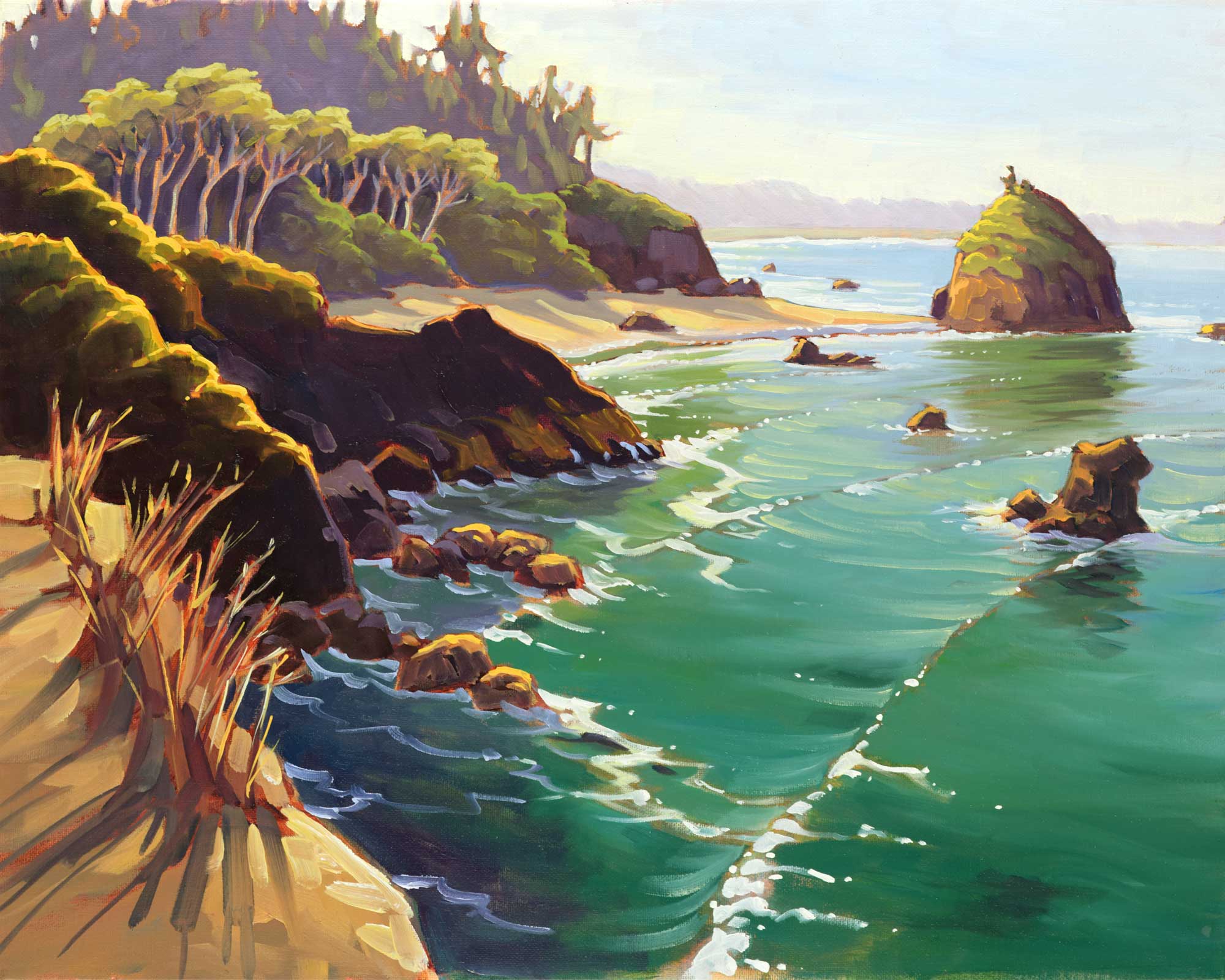
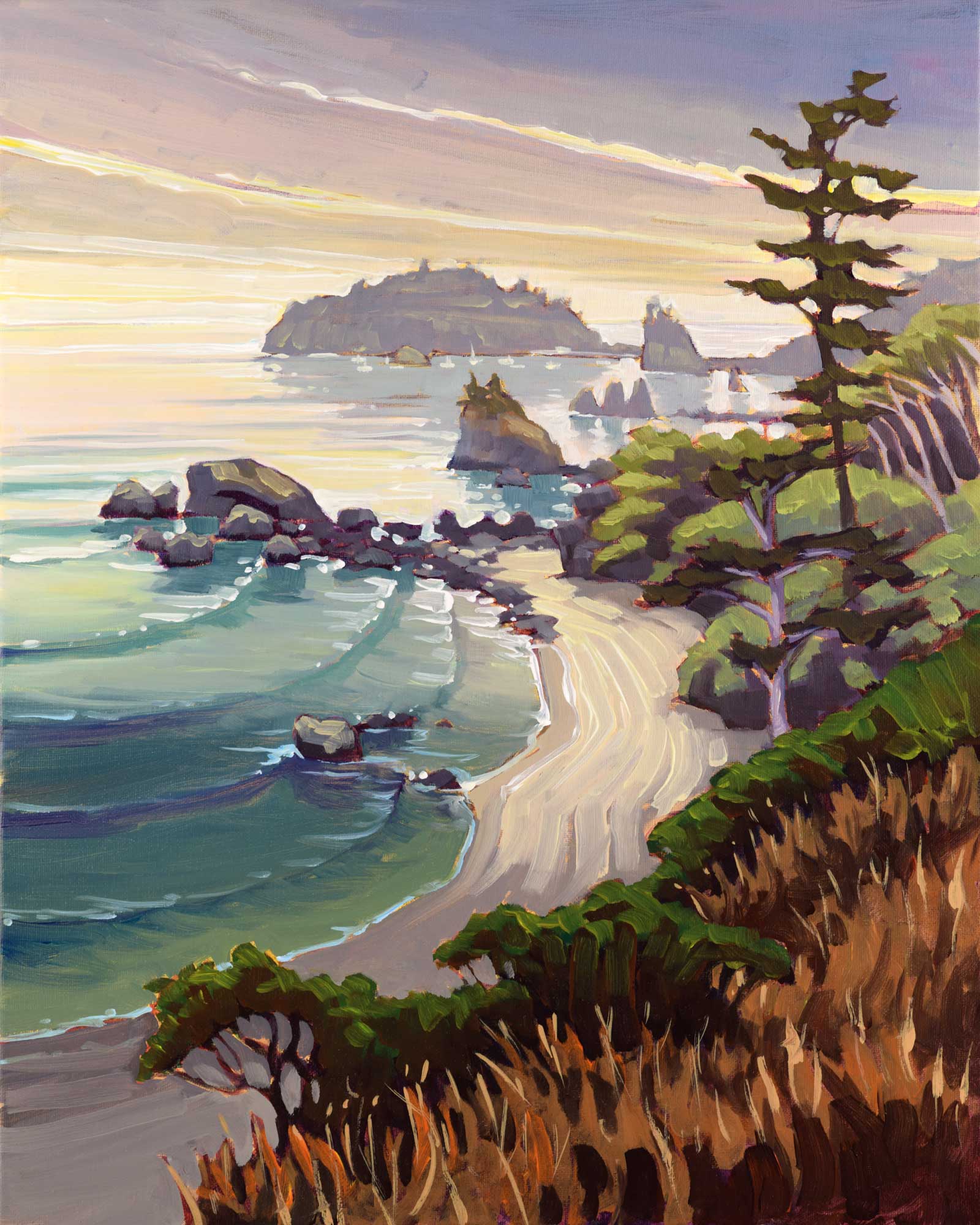
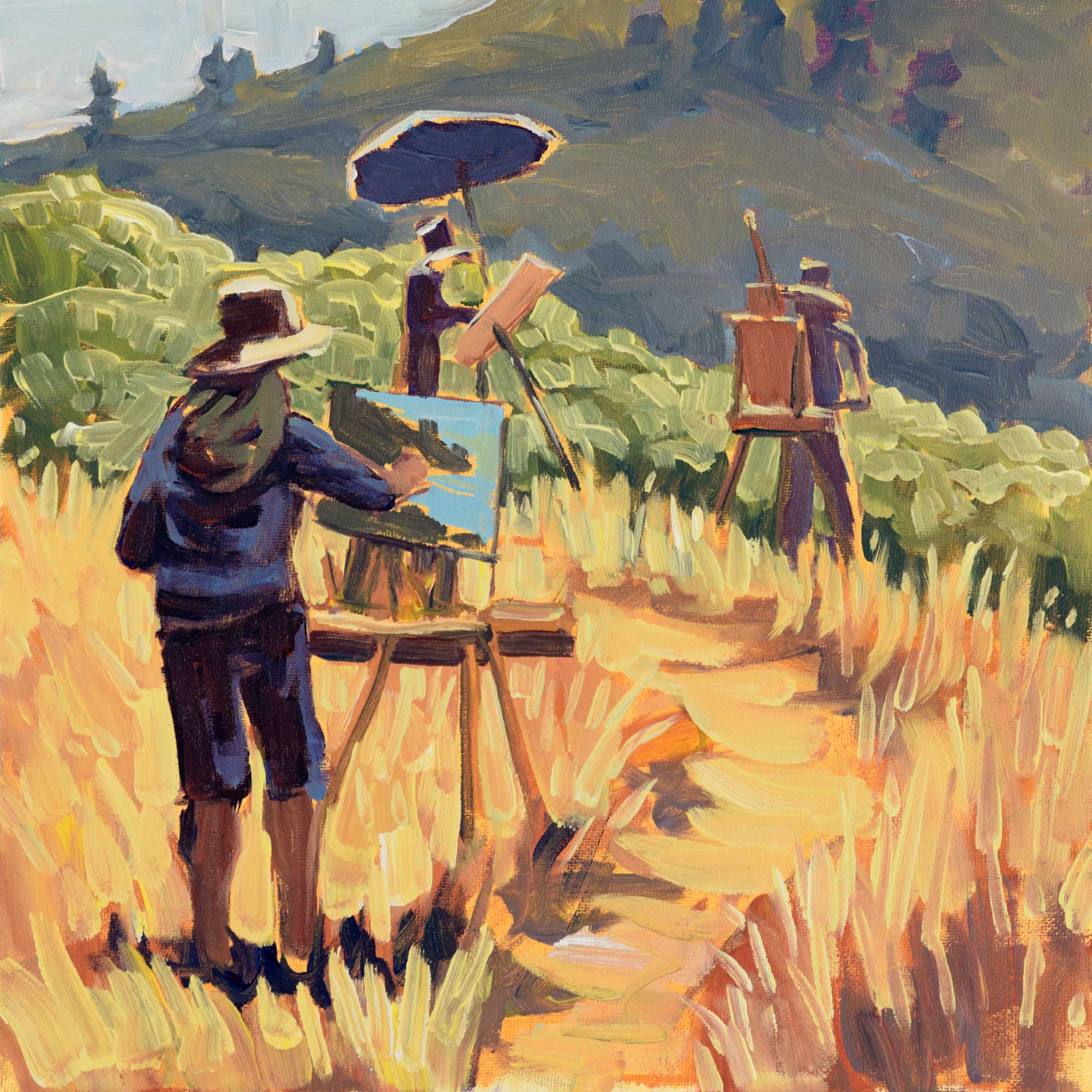
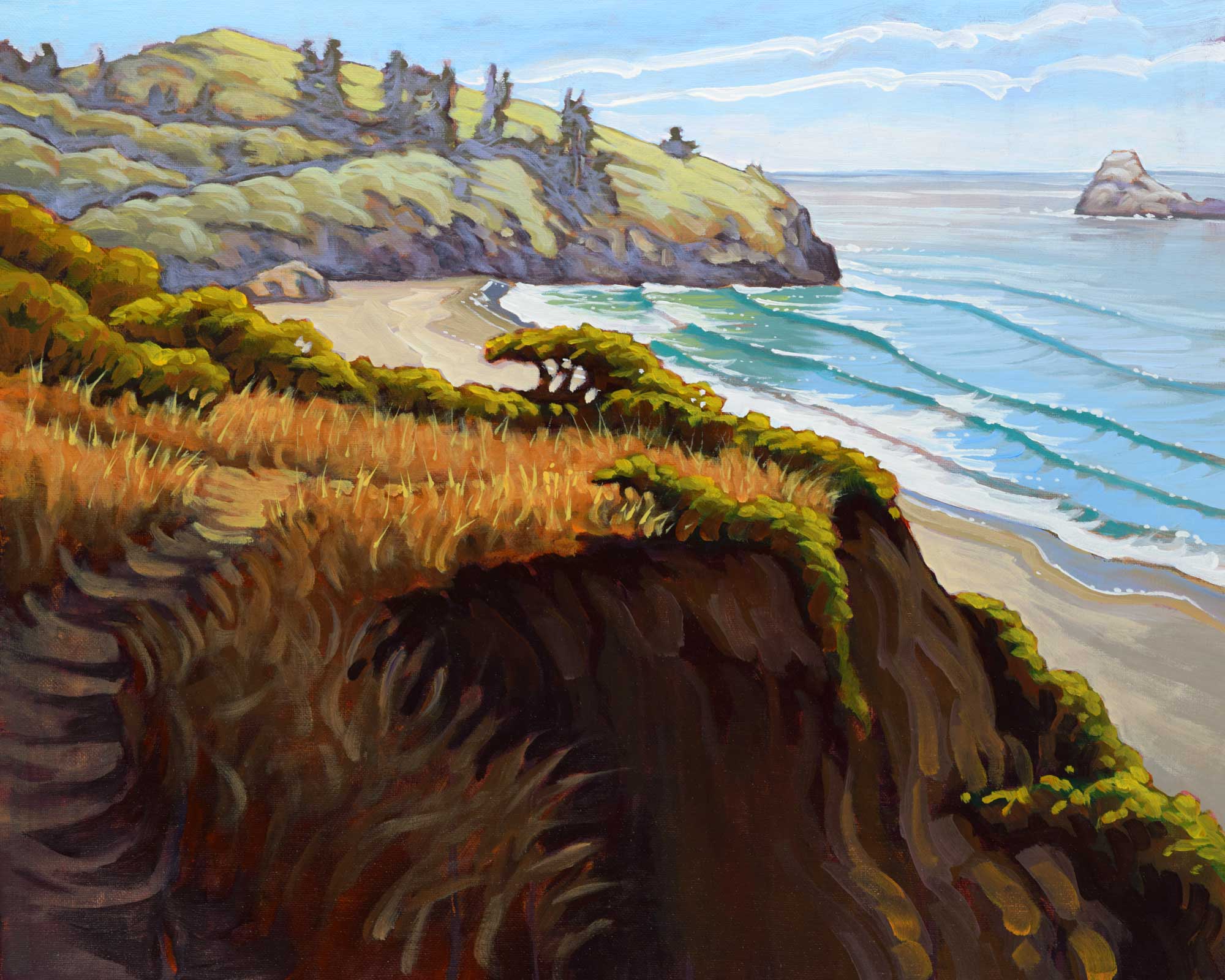
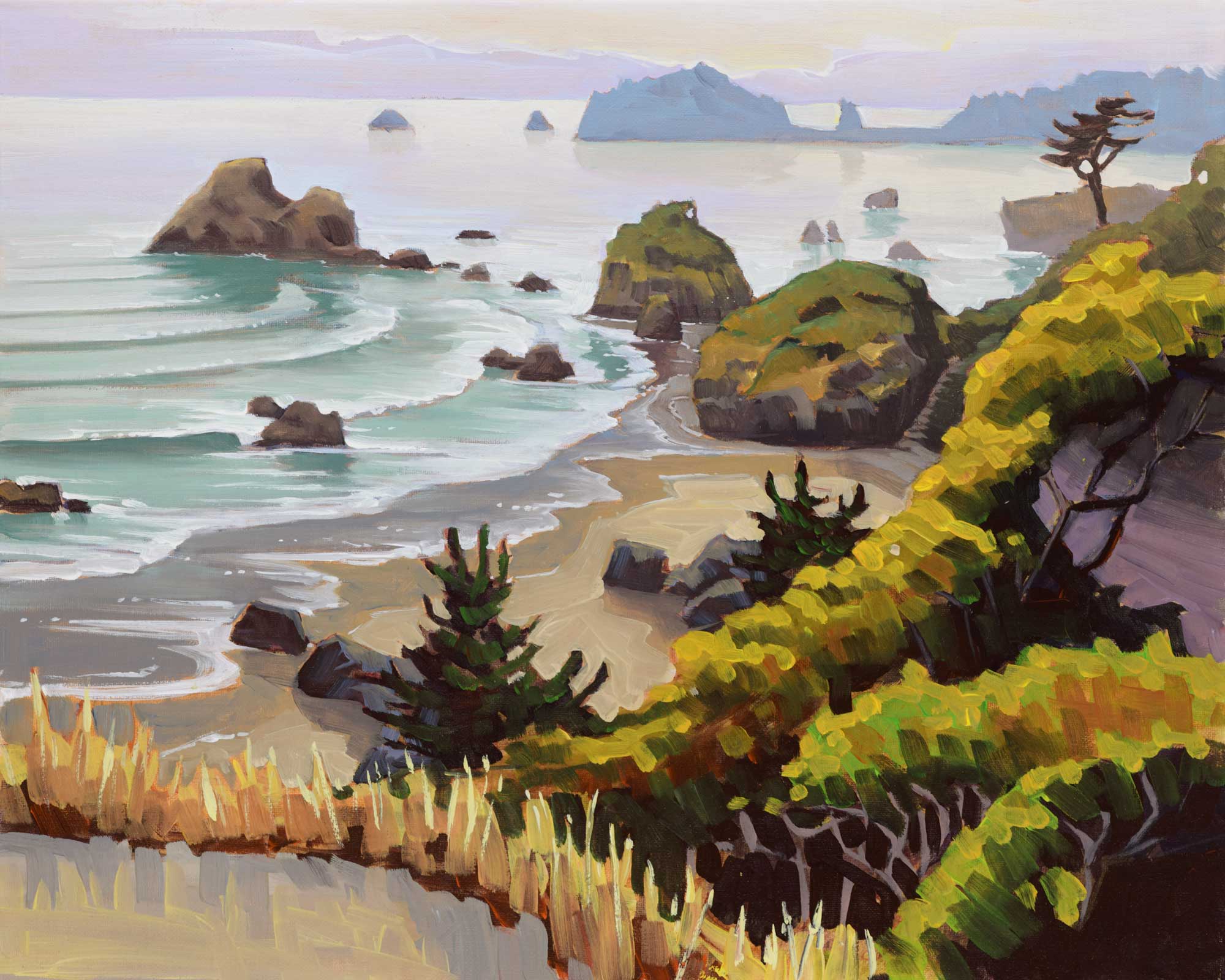
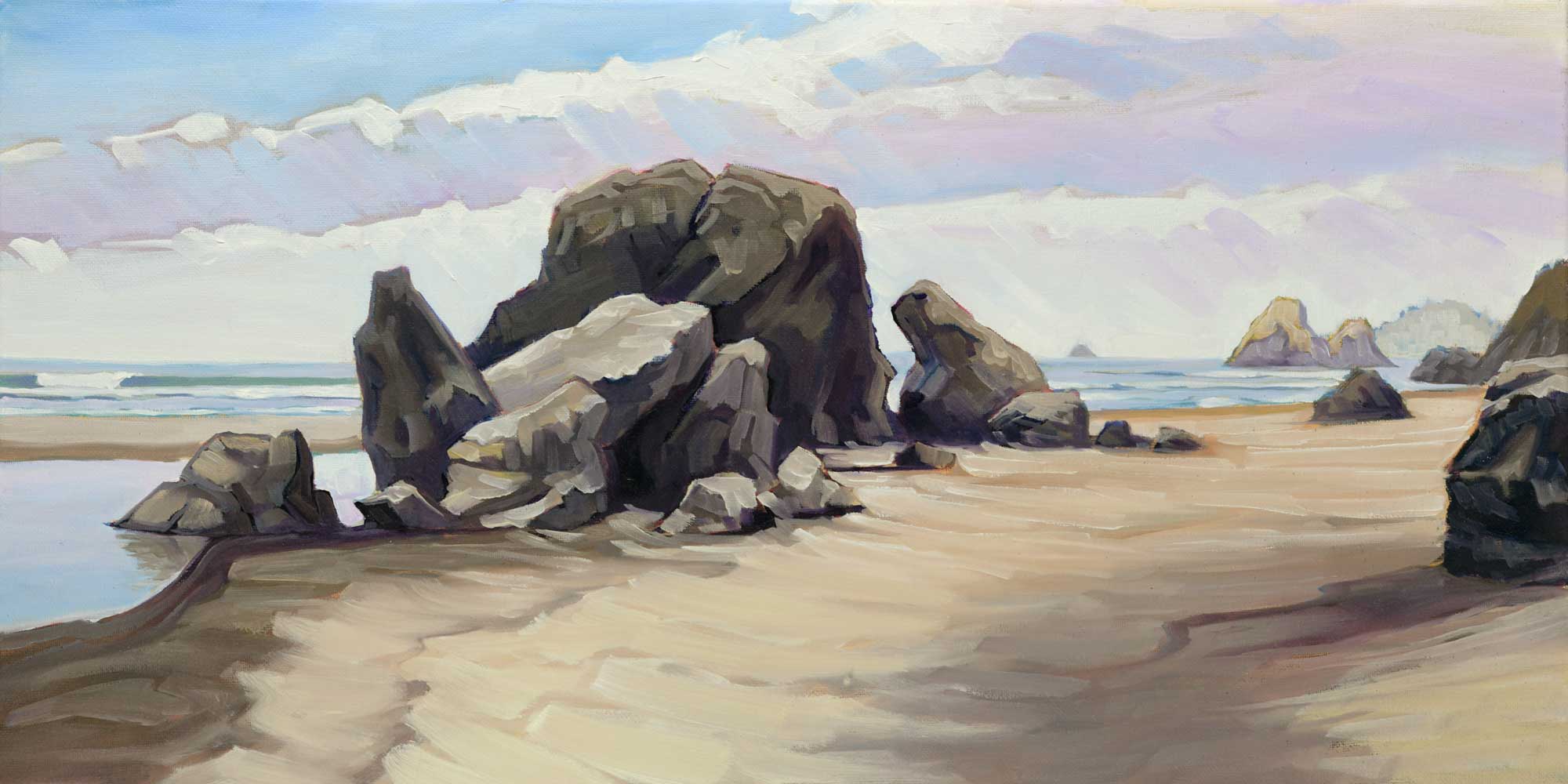
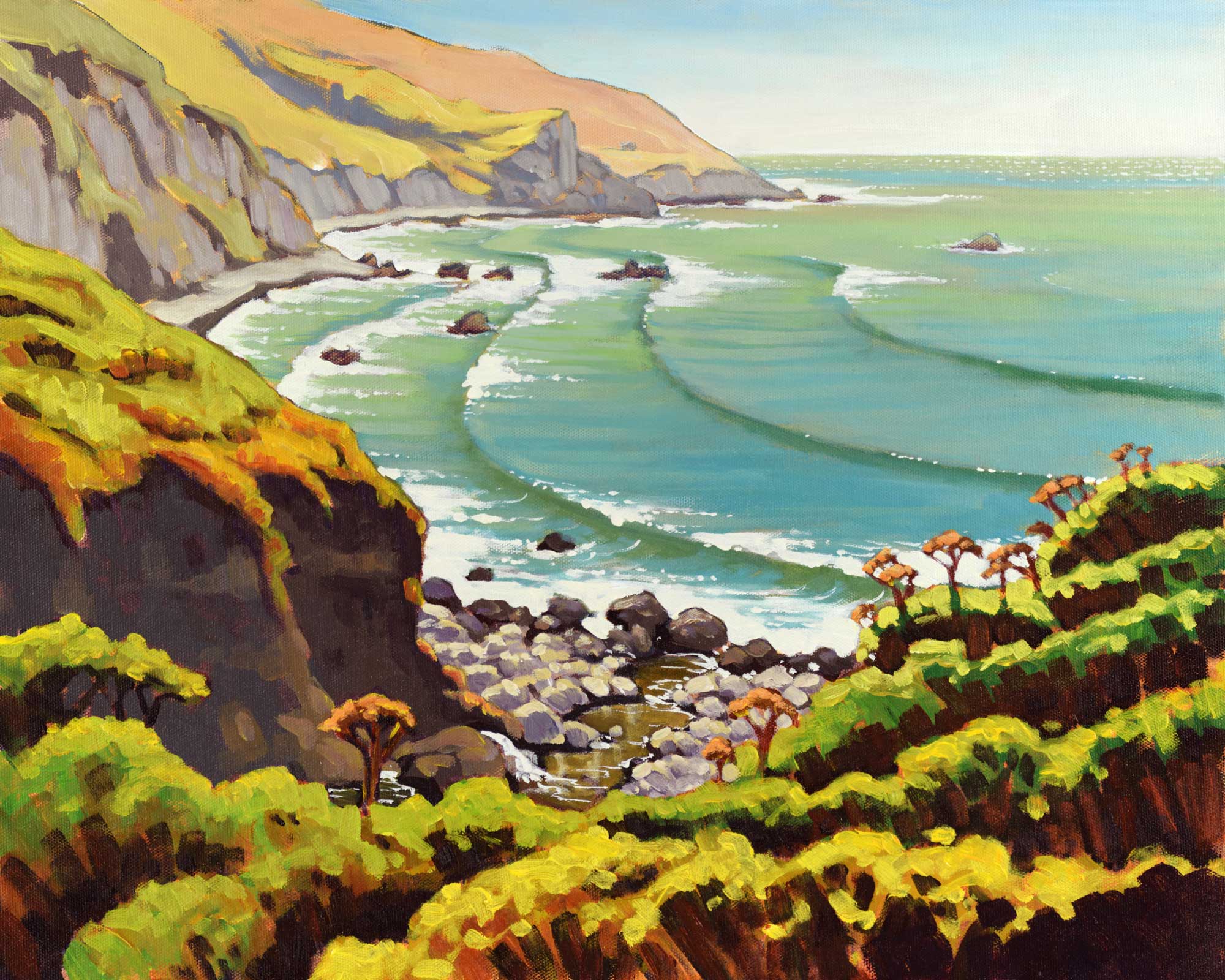
The final panting of this trip. To keep our packs as light as we could (since I was carrying an entire studio) we carried little water with us- just enough to get to our next destination point and keeping our eyes out for water sources along the way. We brought a small filter and there’s lots of creeks that flow on this rugged coast year round, so we knew we wouldn’t have much trouble. This proved to be a perfect creek to drink up and refill after a long morning of painting and getting dried out in the now hot wind. It was also just enough of a bend in the coast that it didn’t face the full force of the wind and we opted to stop again for one more large painting before hiking the final 4 miles back to the car.
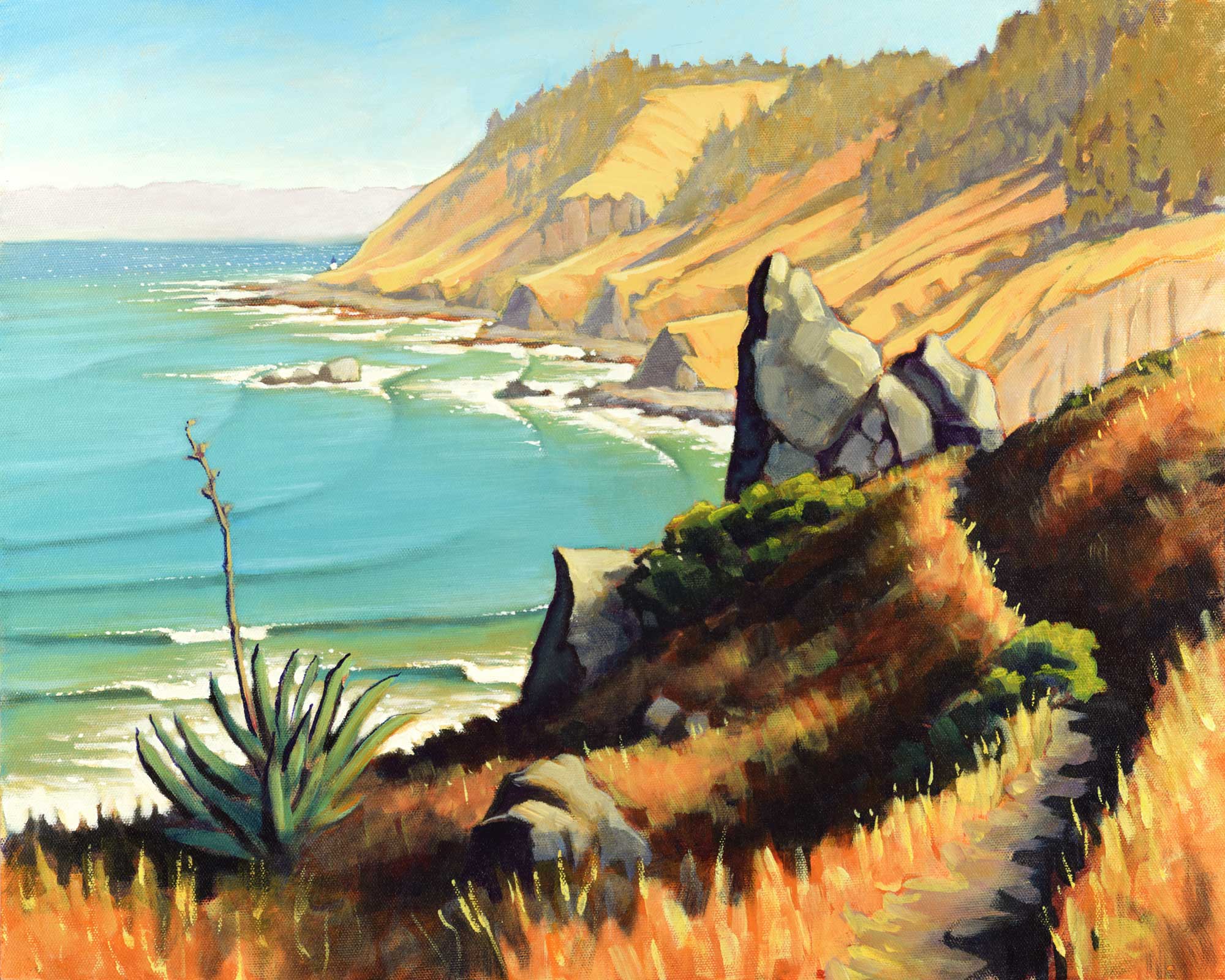
As we hiked our way down the coast yesterday, I made a lot of mental notes for today’s paintings. Yesterday was for reconnaissance and smaller, quicker paintings. Today was time to get to work on some larger vistas. This was a scene that really struck me the day before. A sweeping view, punctuated by triple exclamation points in the solitary yucca, the jutting rock by the trail, and the old lighthouse barely visible in the distance. In the strong morning wind, I set about painting this larger 20″ x 16″ on location from this steep bluff beside the trail, carefully dodging poison oak, and thoughtfully weighting down every element of my supplies to keep them from blowing over the edge. I’d seen this spot in the afternoon light the day before, but had no idea what a treat it would be to paint here now. There is something so good and right about a crisp morning light.
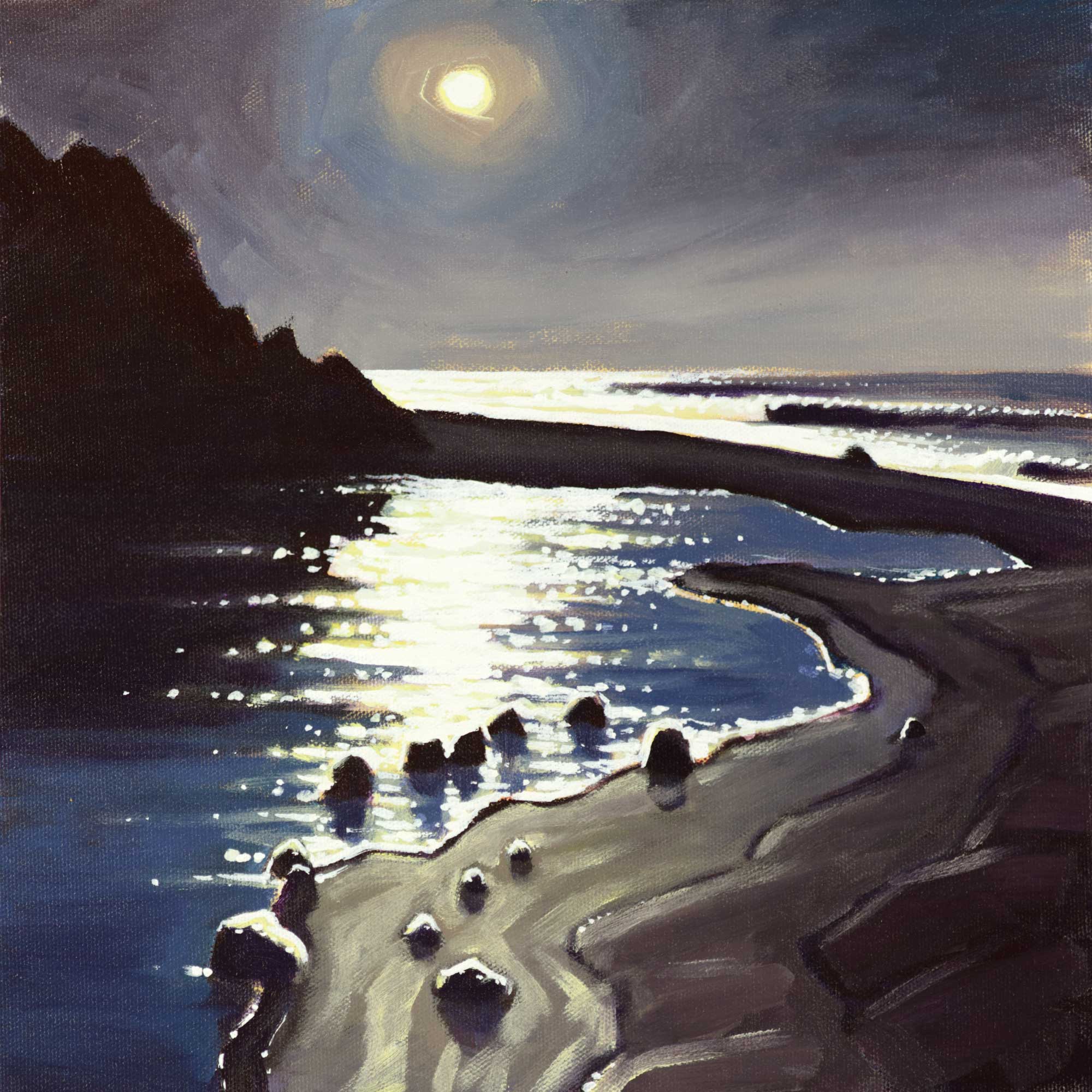
As my wife slept in the shadows by the creek beside this headland, I stood and faced the moonlight and attempted to sort out mixing colors by headlamp. Due to the timing of the tides we’d have to leave first thing in the morning so even though I’d rather have been sleeping myself, this was my only chance to paint here, over 7 miles from the nearest dirt road- our furthest point reached on this quick backpacking trip. It might look a peaceful serene setting, and in a way it was, but it was anything but silent. If you squint your eyes you might just hear a gust of canyon wind rushing to meet the crashing surf. Or an artist grumbling away by headlamp attempting to quiet his own inner struggle to stay motivated. This title may or may not also be referring to the manner in which I sleep, which can also be anything but silent- especially when I’m dog tired from hiking and painting all day and into the night. Sorry, honey. I love you!
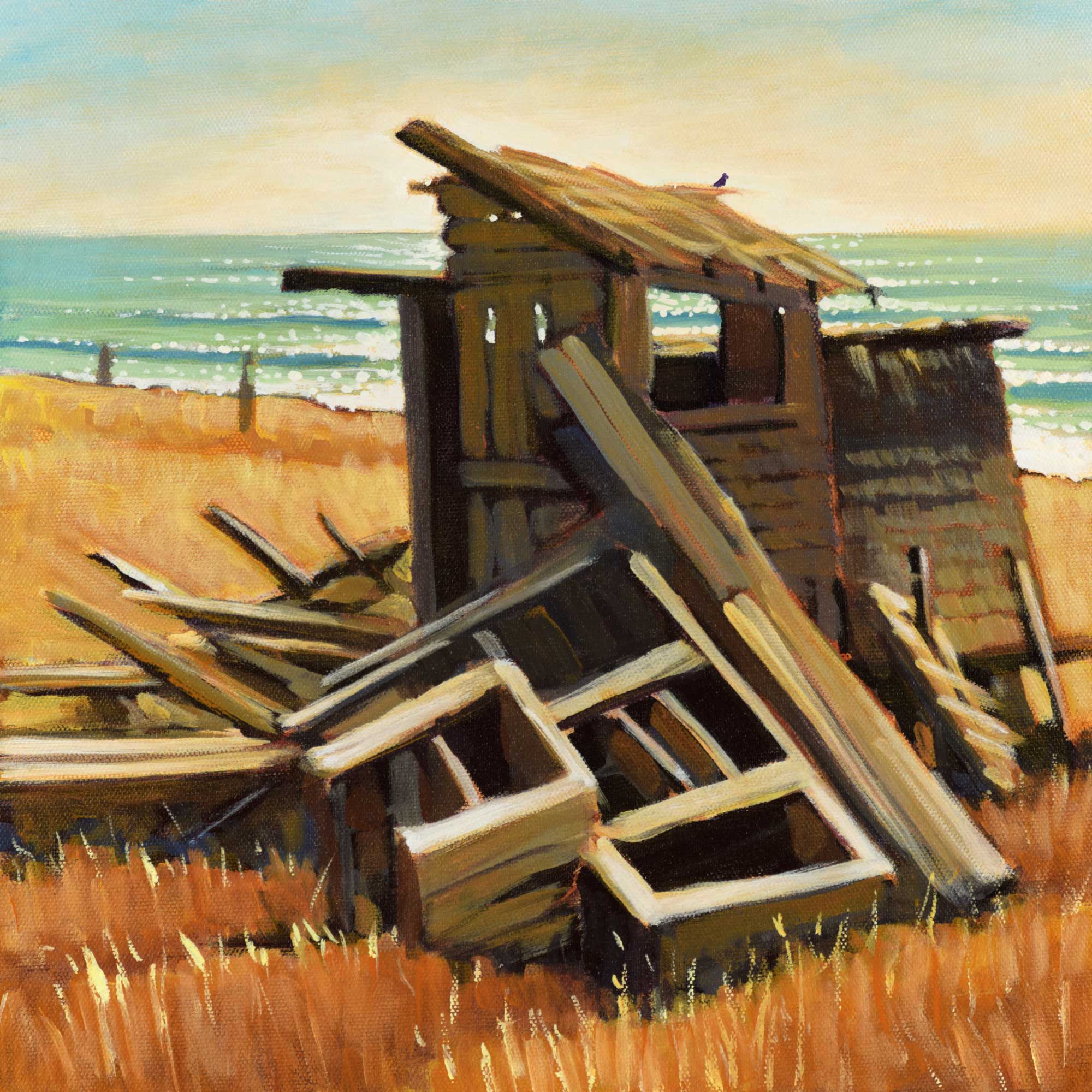
Not quite a proper backstory, and not quite a poem, this one took a rare detour into something else… either way, hope you enjoy the tale.
Food running low. The hunter prays for a kill as he reaches into the dusty cabinet for his last handful of oats before the sun sends the shadows scattering to hide behind every rock and tree they can find. Out the window in the pre-dawn light he sees movement, but when he looks intently there is nothing. Just the grassy flat leading to the precipice over the sea.
But he can’t shake the feeling he’s being watched. And he is. I watched him like a ghost all afternoon as I painted these crumbling remains of his cabin. I watched him bumbling about inside while waiting out the days of rain. Talking to his horse. Carrying the bodies of the freshly dead in the afternoons. Drinking himself stupid under the moons.
Separated by nothing but 30 paces and time, he saw me once or twice and muttered something to himself. The third time he threw a rock with a yell. His aim was good. It passed straight through my chest.
When the painting was finished I packed up my gear while he gathered up his belongings and tucked things here and there into his saddlebags. When we were both ready, he led his horse toward the spot where I stood, nearly looking me in the eye, but in a distant way. He stopped and turned, practically standing in my shoes, and looked back at the cabin one more time. But this time he saw it through my eyes as the earth reclaimed it’s walls and floors, timbers and beams. What was built for man, was now a palace for squirrels and was soon to be nothing but a high patch of ground for the morning shadows to hide behind.
As we both stood there, I watched his memories scatter in the wind. His heart hung in tatters, like a prayer flag on the barbed wire fence, and he let the rest of himself blow away entirely, leaving me there alone with his horse’s reins in my shaky hands. I’m no horse rider. It was all I could do just to mount the beast, but it knew the way, and it would carry my body home.
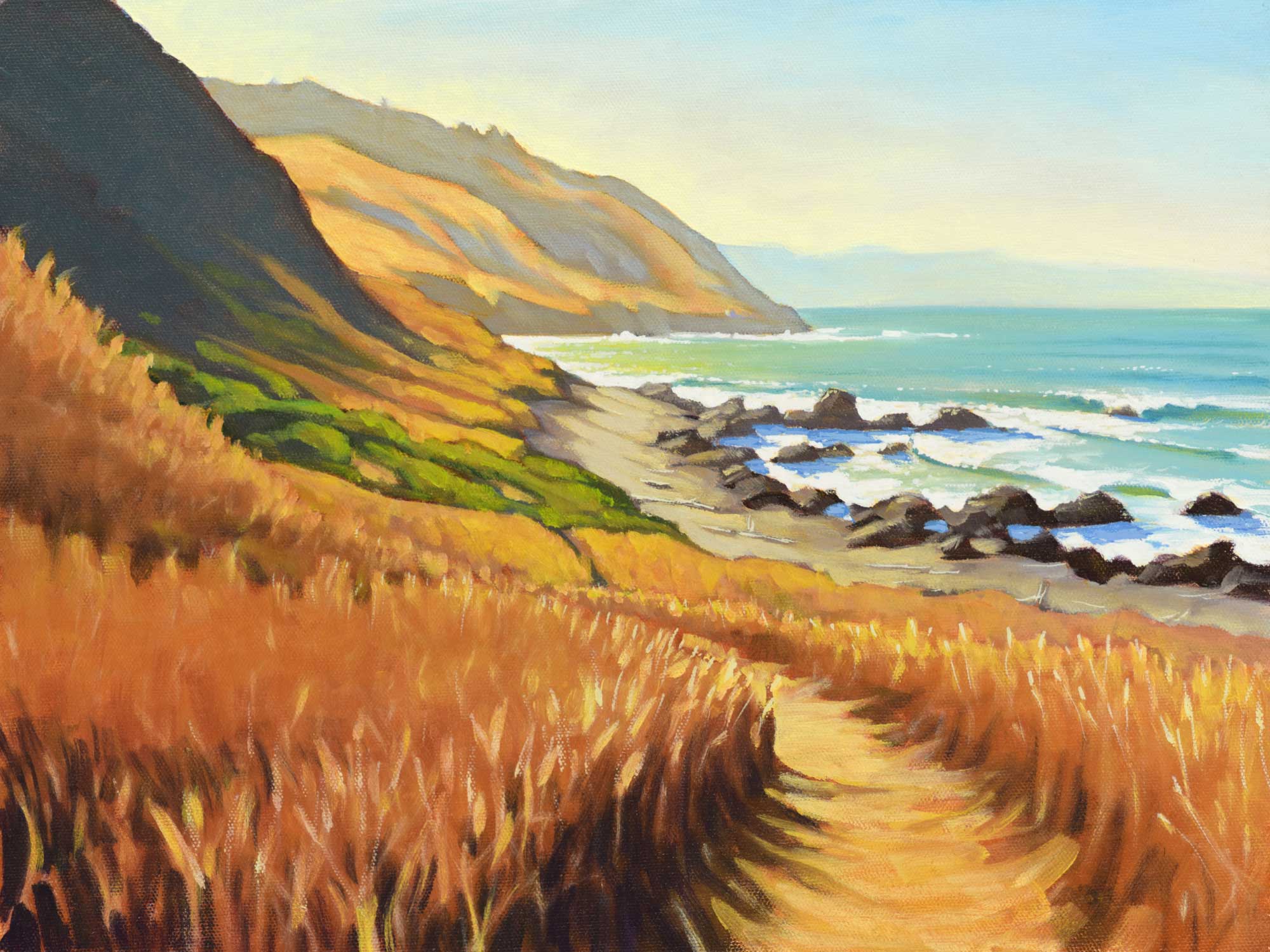
Just a reminder to never abandon your light.
You will wind up empty, forlorn.
Graffiti on your walls, occasionally funny, sometimes crude.
But mostly just the illegible names of spirits brought in by the wind.
And the markings of lovers whose bodies were dragged in by the tide.
Your doorway darkened by the ghost of a travelling painter.
Stealing your light.
Haunted.
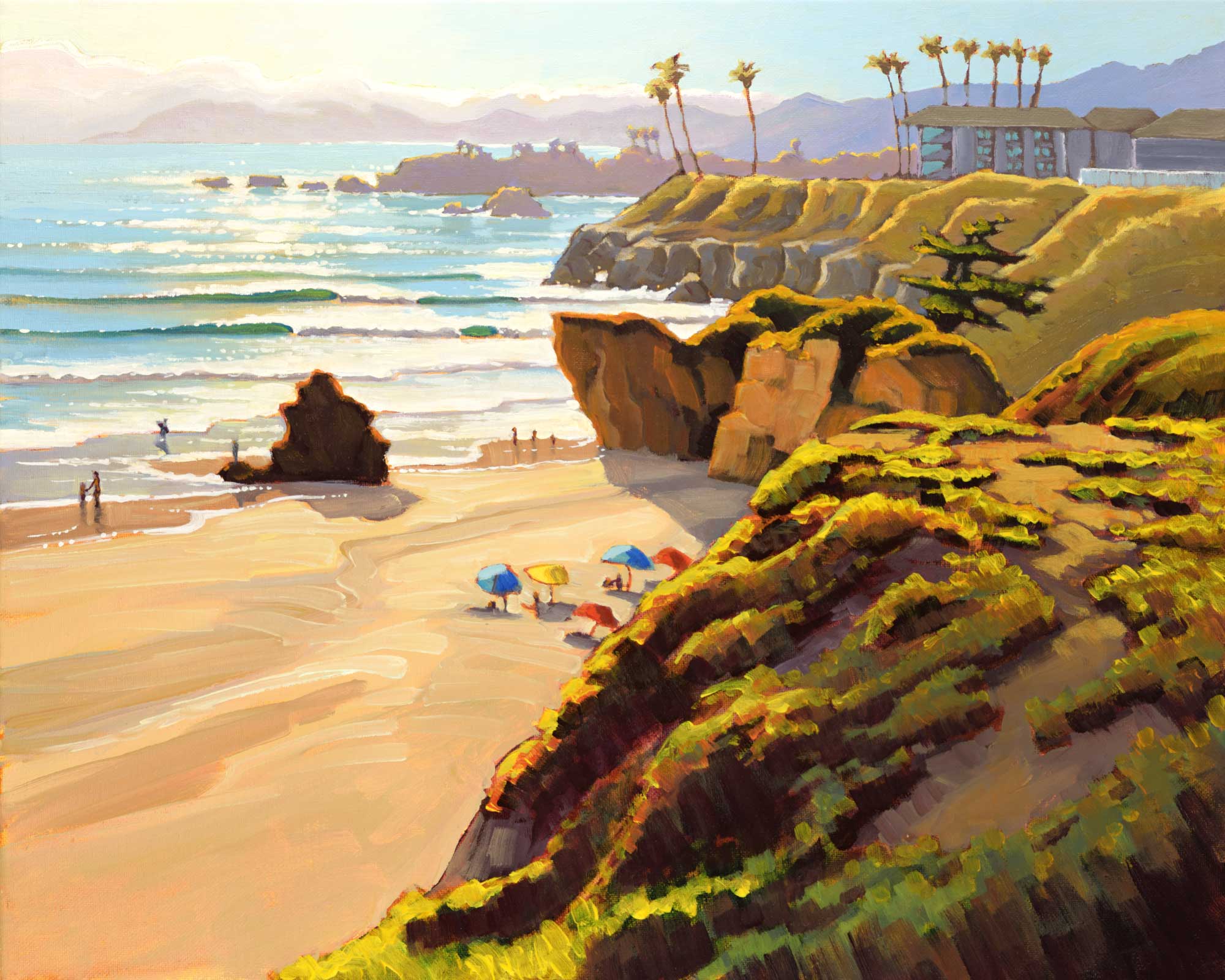
I know you guys think my job is super easy. Just cruise around and paint pictures between coffee and beers and donuts and tacos. Go for a surf if the waves look fun. Hike around in beautiful remote places on the edges of the world. Hmmm… My job is pretty easy, come to think of it.
But there are also days like this one. Glorious sun-filled afternoons overlooking beaches full of memories. And on this day, it held far more than memories, it held my family- my wife and kids playing in the surf and sand below while I stood around on this forsaken cul-de-sac overlook painting the scene through a thirst-inducing 82 degrees of separation.
I painted fast and furious in hopes of joining them before they grew tired in the lengthening afternoon sun, but no matter how badly I wanted to finish this one and paint myself into the scene dragging my older kids out a little further into ever bigger and better rolling waves, it wasn’t going to happen today.
Today, this was the hardest job* I’ve ever had.
But it’s ok, not every day is like this, and me playing on the beach sure wasn’t going to cover the cost of this little trip that at least allowed them to enjoy the afternoon here. Sometimes life is work even when you’re living it up in the Motel California.
—
*Speaking of jobs, did you know I used to always mention in my art bios that I’d never actually held a full time job? I did. Then after years of putting that statement out there I realized that most folks would read that to mean I’d never actually needed to work. As in some sort of trust-fund hidden wealth had allowed me to live this free and easy life. Well that was never the case. What I meant to say is that I was, and still am, proud to say I’ve always valued this pursuit of art so much that in spite of being ridiculously broke year after year, I never wanted to take on full-time work and become so drained by it that I’d let my art fall by the side of the road and into the ditches I would end up digging for someone else’s dream should I ever let go of my own.
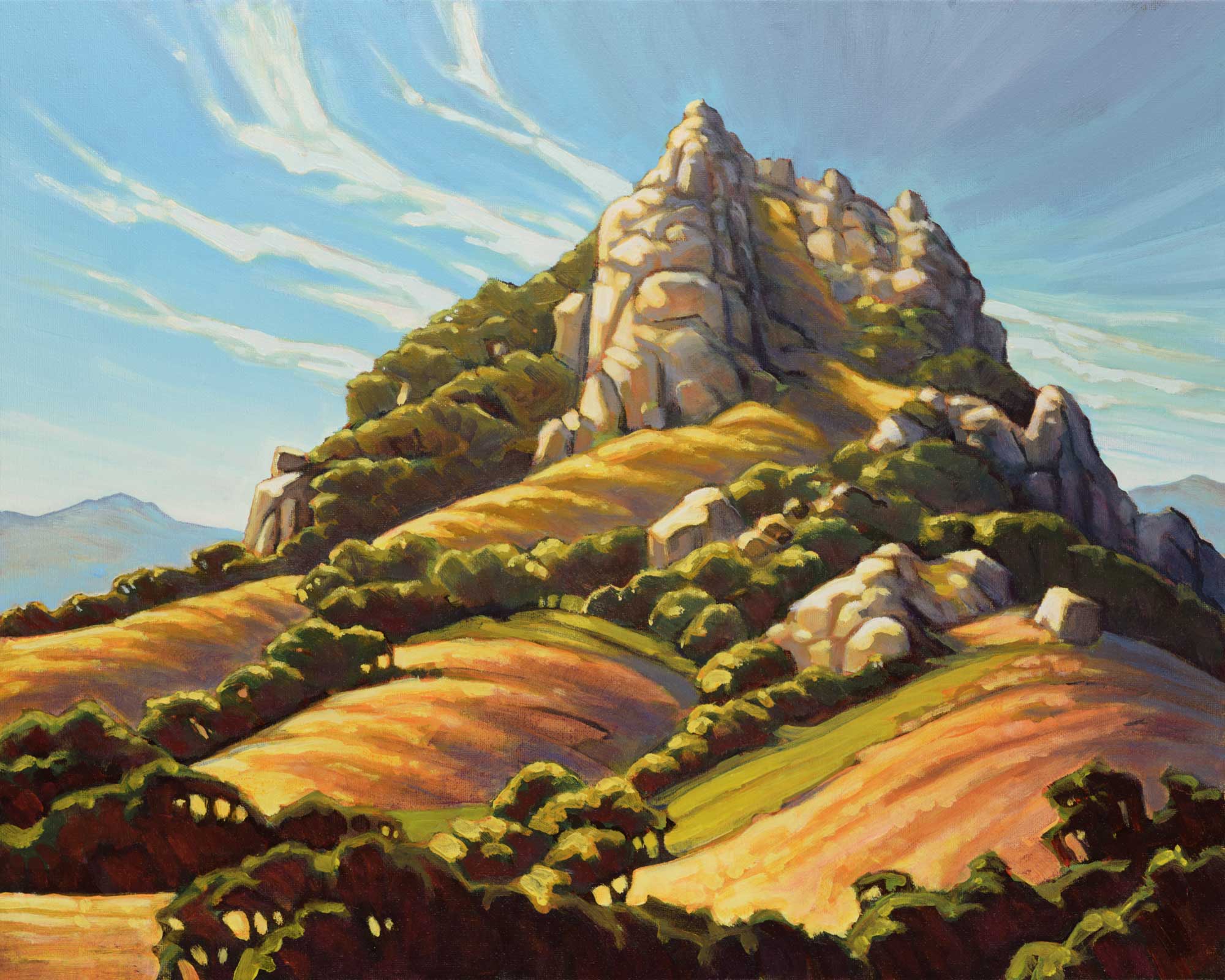
William Wendt was a master of California Impressionism, a distinct school of impressionist art forged in the California landscape back in the early 1900’s. One of Wendt’s most iconic paintings is called Where Nature’s God Hath Wrought and features a boldly centralized view of this very peak. Look it up if you need to, it’s worth the effort!
Wade Koniakowsky and I spent an afternoon scouting the countryside just off the central California coast, climbing under fences, walking through high grass, fumbling our way around holding pictures of Wendt’s masterful painting up to the mountain before us, comparing his version to reality in hopes of determining exactly where he stood and painted the scene from. We pretty much nailed it down one afternoon and decided to come back to paint it ourselves in the morning light. To be honest, it was a fun diversion from the coast, but I probably wouldn’t have bothered if it wasn’t for Wade. He was into it!
But once we got going I was hooked as well. And also blown away all over again at Wendt’s masterful work. I kept thinking his composition with that mountain smack in the middle of the canvas just shouldn’t work, and yet it does, and it does so with majesty. Neither Wade nor I were trying to recreate Wendt’s painting- we didn’t even look at it again once we had the spot figured out, our goal was just to stand where he stood and respond to the scene before us like we would with any other painting. I can’t speak for Wade, but I’m pretty sure neither of us felt like we had done half a lick of justice to the scene as the morning wound into afternoon and hunger took over.
But still, we’d walked on hallowed ground.
—
It wasn’t until I looked closely at a map later that I realized that my Back Road painting from earlier in the trip is actually the back side of this very same peak. Kinda funny that I painted this mountain twice in one trip and if it weren’t for Wade and the fog I wouldn’t have painted it all.
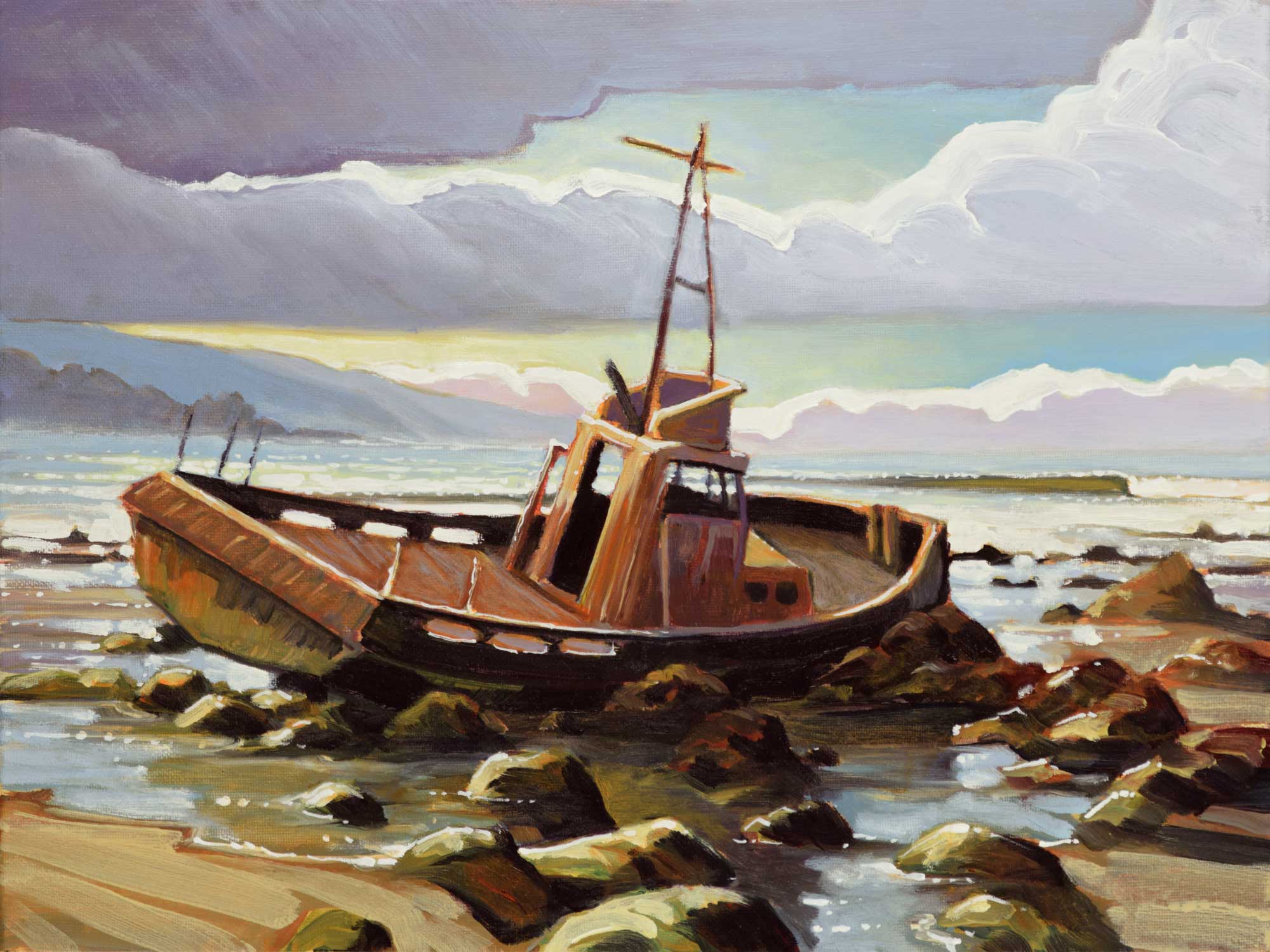
I painted this boat a few years ago, grounded hopelessly on the rocks in a small cove on the Central Coast. I had just learned that it had previously belonged to a friend’s family for years. It was even named after her brother, the “Craig G” until it was sold and the new owner renamed it the “Point Estero”.
I know very little of boats and what I do know filters in through little bits here and there until it’s hard to say if I know it at all or just made it up. But one thing about boats I did not make up is this lyric from Bill Callahan’s song Summer Painter:
“I painted names on boats for a Summer, For luck you keep the same first letter…
You don’t want bad luck at sea.”
No, you don’t. This is what bad luck at sea can look like. It could have been worse, nobody was hurt, but still no fun. Bad luck at sea looks a lot like bad luck in the intertidal zone now, and one can only hope it stays there and doesn’t become bad luck on land as well.
So far so good, this is where it’s been since it wrecked back in 2017. Except it’s spun around 180 degrees. It’ll eventually break into pieces here, but not for a real long time. Solid boat. Part of the landscape now.
I wanted to revisit it on this trip. It’s a great reminder that no matter how the world tries to label you, alway remember your true name… or at least it’s first letter, because you don’t want bad luck at sea. And also that no boat stays at sea forever, and for each of us our day will come sooner or later, and often unexpectedly.
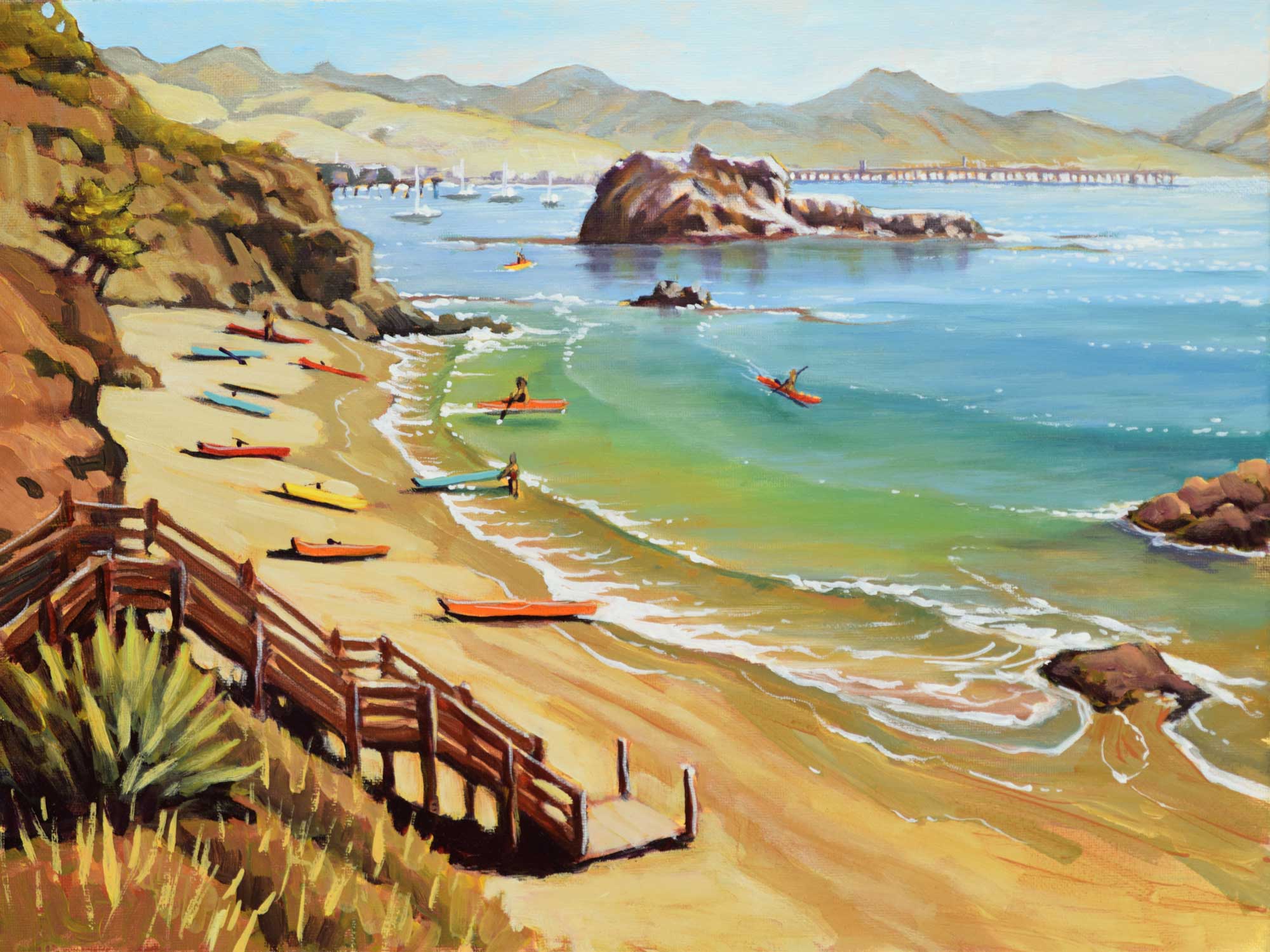
A little further than the road will take you, this little cove is accessed mainly by kayak or paddleboard which means getting out here to paint while armed with just a van and a backpack is a tricky matter of… logistics! Oh, how I love logistics.
And also my friends, like my good art pal, who lives just over the hill from this spot (check her art out, she paints like she means it, you’ll be stoked). Wade and I met her at the beach a mile or so into the harbor and joined her on her family’s kayaks and paddleboards for this little venture. All the art gear secured in our fancy dry bags (hefty trash bags, good for only the quickest of dunks), we paddled across on a sheet smooth blue-bird day that gave no hints of the howling wind that would greet us on the bluff over the cove where the coast makes its turn.
I typically like to get as high as I can while painting… elevation-wise (art is its own good buzz), but the wind just wasn’t having it up on the cliffs overhead, this little perch in a nook at the top of the stairs was pretty much the only option, but thankfully not a bad option at all for telling the story of this little kayak party cove.
After an afternoon of painting in the hot dry sun, I was looking forward to the paddle back on the cool water once again. Though now that we had finished paintings in our fancy hefty sacks, riddled with holes from the sharp corners of various bits of gear, the stakes were certainly a little higher. Don’t fall, don’t fall, don’t fall.
We didn’t fall. (Well maybe a little bit on the final step off to the beach, but that didn’t count because the art and gear were not affected.)
Beers and fish sandwiches afterwards never tasted so good. Huge thanks to Colleen Gnos for taking Wade and I out there.
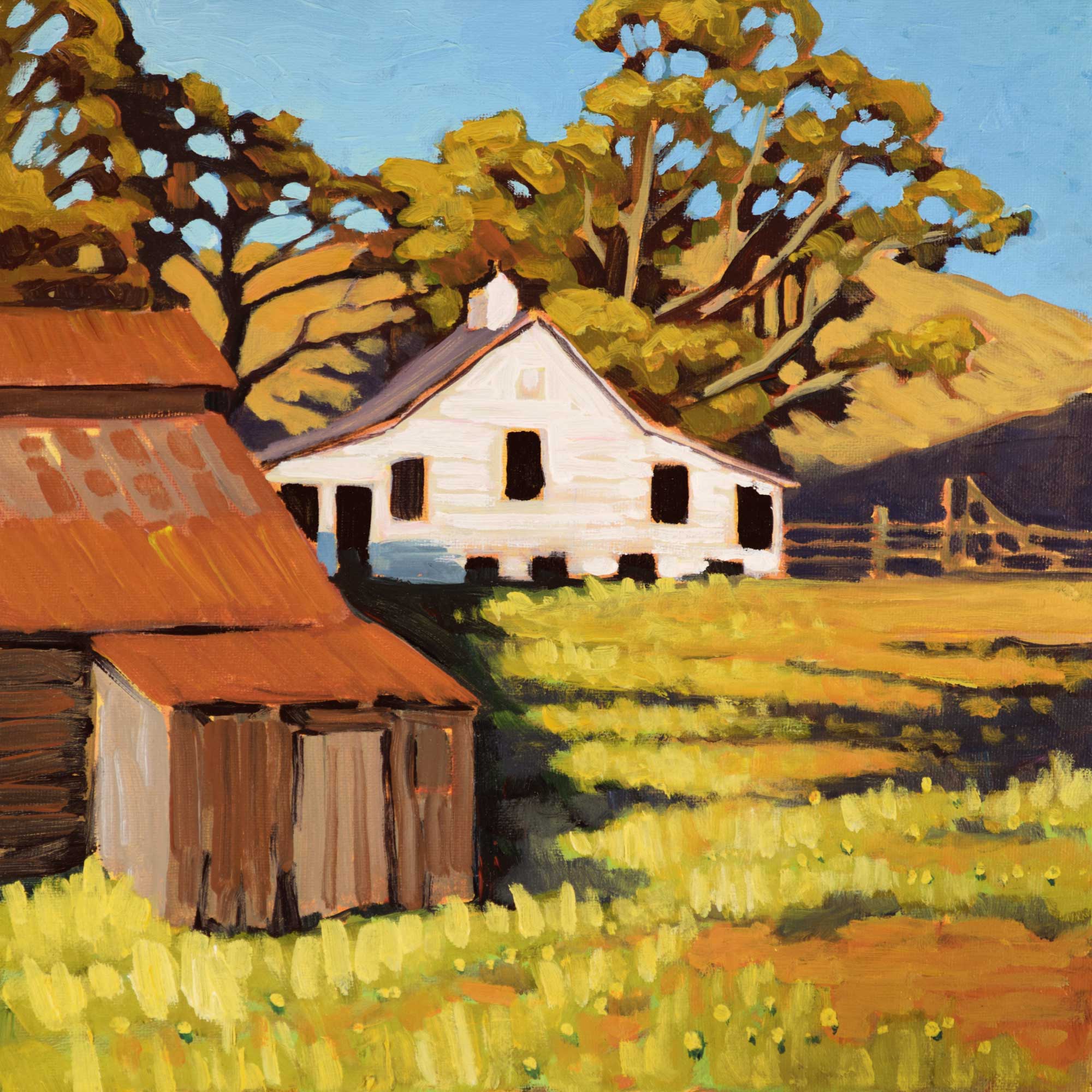
Ok, let’s circle back to the Italian dairy farms that took root here in 1860’s… I painted this small dairy farm building one afternoon from beside an old ranch house where a not-so-Italian* friend of Wade’s was living.
Another not-so-Italian* fellow had long ago purchased this land and set up operations here all the way back in 1867. He first lived in the very ranch house where we were staying** (right behind me as I painted this scene), set in this picturesque valley, and began overseeing the dairy operations behind the house with a mind toward something bigger than the dairy. A former ship captain himself, his interest was in shipping and commerce and not long after settling here, he built the town’s pier straight down from this dairy (along with a fancy new house right beside the pier that still stands today as a registered landmark, leaving this small ranch house and its dairy in its historical shadow).
You can’t see the ocean or the pier from here anymore, the new coast highway has been laid on an embankment built up across this valley, separating the coast from this small dairy farm that has long since ceased dairy operations altogether. But their pasts are inextricably linked together. The isolation now provided by the highway has perhaps also helped to preserve this piece of history.
On this bright summer afternoon I couldn’t resist attempting to tell its story. It’s not a public place, I was only here because of Wade and his friend that was living here at the time, so this was a rare opportunity to paint an ordinarily off-limits piece of history. I’m sure I botched parts of the story, but I tried to keep it straight.
—
*Just a guess, maybe they both had veins full of raging Italian blood and I just didn’t know it?
**Holy moly, one evening we were treated to a steak dinner in the very ranch house dining room that rivaled any steak I’ve ever had. The walls, wainscoting and trim all covered in umpteen coats of proper lead paint, old and darkened wood floors, nothing fancy by our standards, but the effect was nothing short of time travel. History never tasted so good.
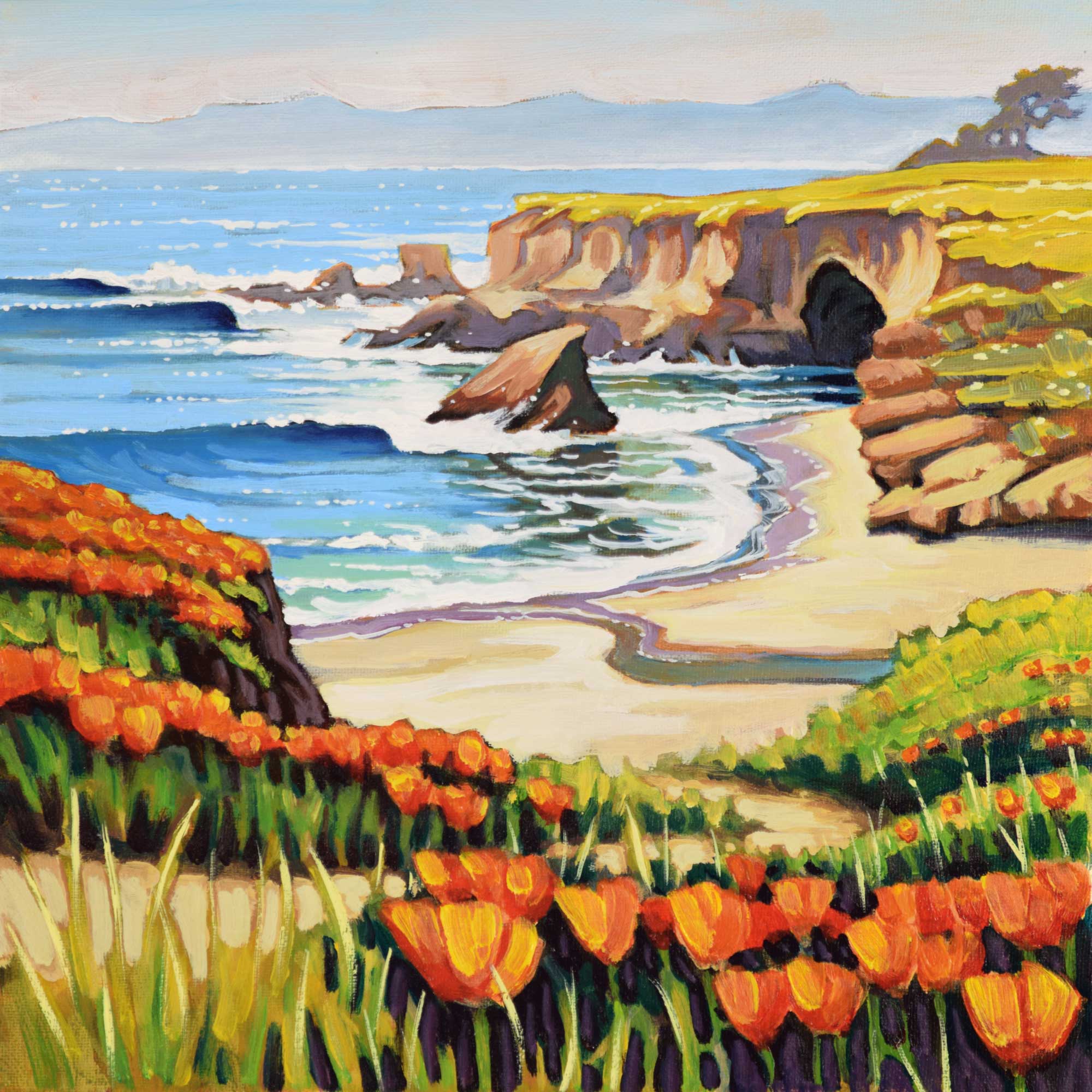
Corralina, it’s the Italian word for coral, and though no coral is found in this cold water, there is a red seaweed with a hard calcareous surface named corralina that does grow in these rugged tidepools. There’s also gold poppies that bloom in the spring here. I’m a sucker for poppies.
I had a strict 25 minutes to paint this one before getting locked in for the night with the mysterious devil in the white truck (see previous post). Not a pleasant option, I’d have to work faster than usual this time.
Also cookies. I don’t know how they got there, but I recall setting up to paint and finding some big delicious chocolate chunk cookies in my paint bag. I had to eat them quickly too, on account of the time constraints and all.
But don’t worry, I’m a professional. 24 minutes later I was strolling past the gates at closing time, checking out after a long day’s work, humming a little tune, the two wet paintings strapped to my pack, cookie crumbs falling out of my beard, savoring the taste of sweet freedom. Neither sweet beauty nor sweet morsel would be my downfall today.
I’d sleep wherever I want tonight.
In my van.
America!
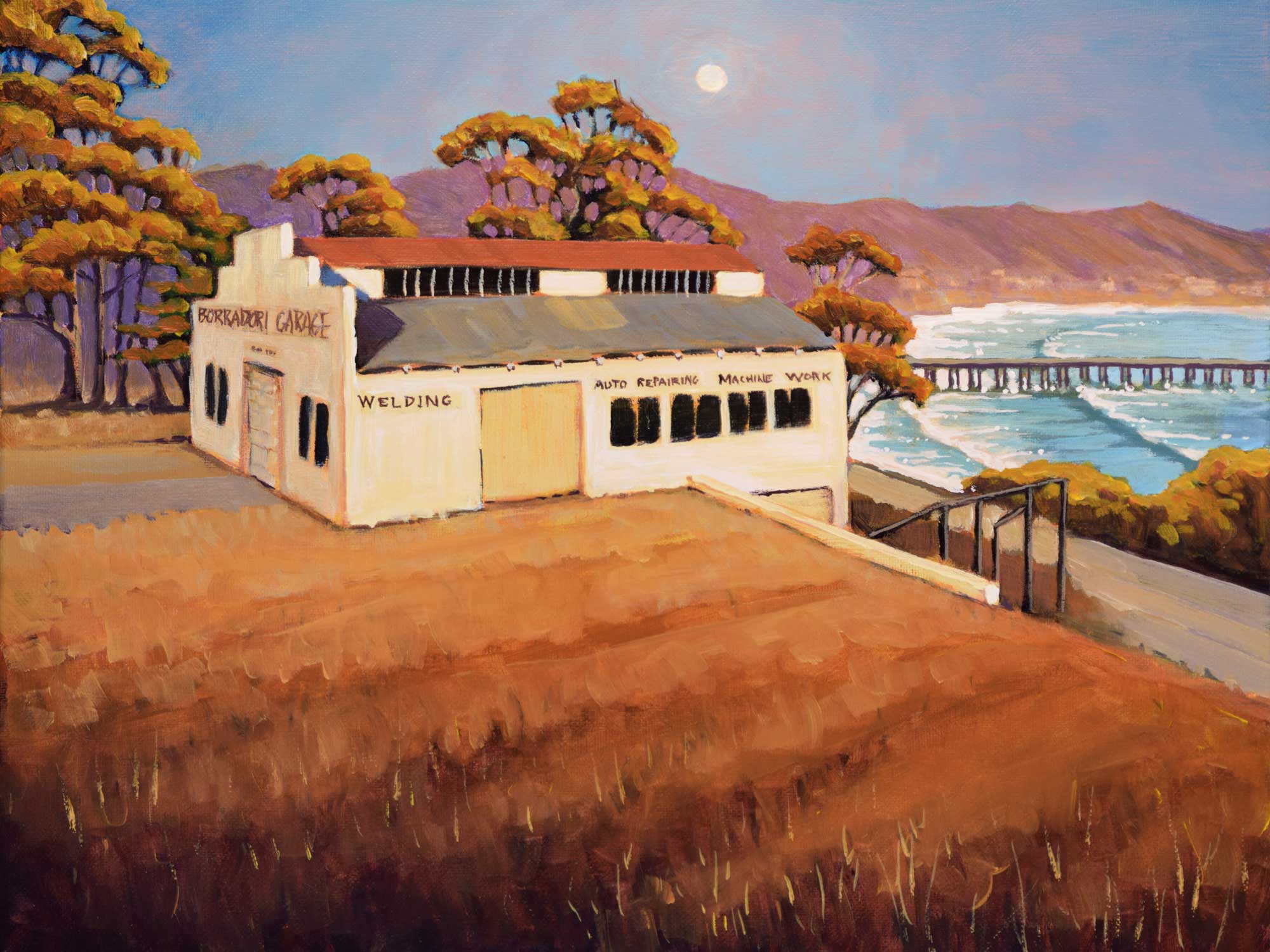
High tariffs in the newfound Kingdom of Italy in 1865 led to a large number of dairy farming Swiss-Italians to come to the US and eventually settle around this town. This coincided with the massive droughts that had just collapsed the large cattle ranches that dominated the California coastal landscape until that point.
After the drought, small dairy farms became a viable reality and by 1880, Italian was the dominant language in this small town. And to this day the Italian influence can still be seen with icons like the Borradori Garage, (established in 1932 by Sam Borradori) standing watch over the pier that was originally built in the 1870’s to facilitate shipping of the local dairy products.
It’s a peaceful setting, not at all what another notable Borradori namesake, philosopher Giovanna Borradori writes about in her volume “Philosophy in a Time of Terror”. The title of this painting, “La Meccanica in un Momento di Pace”, is Italian for “Mechanics in a Time of Peace”, an inverted nod to both Borradori’s. What is more opposite of terror, than peace? What is more opposite from philosophy than mechanical repair? Maybe that one’s not as obvious as the first, but I’m sure a case could certainly be made* over a beer or two while standing on top of my van watching the full moon rise in the soft summer evening light.
*Full disclosure: I hold a minor degree in philosophy so standing around on an incredibly useful mechanical vehicle while arguing about incredibly useless subjects is something I consider not only good sport, but also an art. Cheers.